
Most equipment operators have experienced this common issue: brand-new excavator attachment run crisp, stable, and highly efficient. The striking rhythm is consistent, and every movement responds instantly.
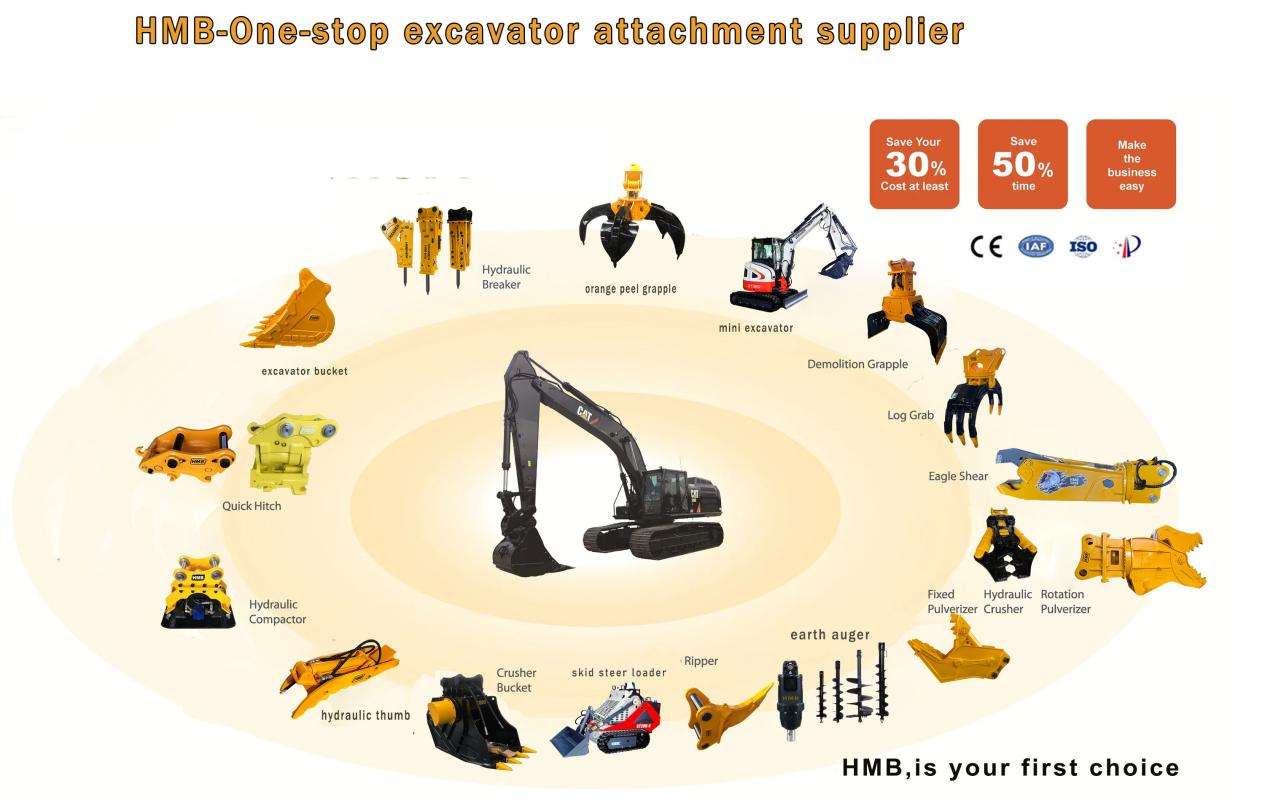
However, after weeks or months of operation, the performance gradually deteriorates:
● Softer impact force
● Unstable working frequency
● Slower cylinder movements
● Higher operating temperature
In most cases, the attachment has no obvious damage or breakdown. The usual diagnosis is simple wear and tear. While mechanical wear does occur, hydraulic attachment efficiency decline is almost always a systematic problem, not a single-part failure.
In this guide, we break down the 5 root causes of hydraulic attachment power loss and share practical solutions to extend your equipment’s service life and maintain peak working efficiency.
1. Internal Clearance Expansion (Gradual Power Decay)
All excavator attachment rely on precision matching clearance between core components. Key fitting parts include:
● Piston and cylinder body
● Spool valve and valve body
● Seals and sliding contact surfaces
With continuous friction and impact load during operation, the original precise clearance slowly expands. This subtle change triggers a series of performance problems:
● ncreased internal hydraulic leakage
● Reduced effective working pressure
● Lower energy conversion efficiency
This is the main reason why your hydraulic attachment feels “weaker” over time. The decay is slow and progressive, making it easy to ignore until efficiency drops significantly.
2. Seal Aging & Performance Failure
Seals are vulnerable consumables that directly determine the pressure holding capacity of hydraulic systems. Seals age and fail rapidly under harsh working conditions:
● Long-term high-temperature operation
● Abnormal hydraulic back pressure
● Contaminated hydraulic oil
● Frequent continuous impact workload
Once the sealing performance declines, the hydraulic system cannot maintain stable internal pressure, leading to typical faults:
● Insufficient impact energy
● Delayed movement response
● Increased external oil leakage
Early seal replacement is low-cost and effective. Neglecting minor seal aging will eventually cause irreversible structural damage to the attachment.
3. Host Hydraulic System Efficiency Degradation
Most operators only check the attachment itself when performance drops, ignoring the aging of the main equipment hydraulic system. The host system directly determines the output power of attachments.
Common host system failures that cause attachment slowdown:
● Reduced main pump oil supply efficiency
● Pressure drift of overflow valve
● Aging and resistance increase of hydraulic pipelines
● Blocked filter elements leading to poor oil circulation
In most cases, the weak and slow attachment performance is not the attachment’s fault, but the overall efficiency decline of the host hydraulic system.
4. Hydraulic Oil Performance Recession (Chronic Hidden Fault)
Hydraulic oil is the core medium of power transmission. Long-term high-temperature operation will completely change its physical and chemical properties:
● Changed oil viscosity
● Failure of anti-wear additives
● Declined oxidation resistance
Degraded hydraulic oil brings a vicious cycle: Poor lubrication → increased internal friction → higher working temperature → further oil deterioration
This is a chronic hidden problem. It will not cause sudden shutdowns but continuously reduce the working efficiency and service life ofexcavator attachment .
5. Changed Working Conditions & Unmatched Settings
Efficiency decline is not always caused by equipment aging. Changed working conditions are often overlooked.
Typical scenario changes that lead to performance degradation:
● Working medium changes from soft rock to hard rock
● Operation mode changes from demolition to continuous crushing
● Working rhythm changes from intermittent operation to long-time continuous operation
When the load increases but the hydraulic pressure and flow settings remain unchanged, the attachment will naturally become slow and inefficient. It is not equipment failure, but parameter mismatch with working conditions.
Why Single-Part Replacement Fails to Solve the Problem
The real efficiency decay of excavator attachment is almost always multi-factor superposition: Clearance expansion + seal aging + oil performance recession + temperature rise + increased internal leakage
Simply replacing seals or cleaning oil can only improve performance temporarily. Without solving systematic hidden dangers, efficiency will drop again soon.
How to Effectively Delay Hydraulic Attachment Efficiency Loss
Equipment aging is inevitable, but scientific maintenance can greatly delay performance decay and keep attachments in peak condition for a long time. We summarize three core maintenance dimensions:
1. Structural Inspection & Maintenance
Regularly check the matching clearance of core components and the aging degree of key seals, replace vulnerable parts in advance, and avoid internal leakage caused by excessive clearance.
2. Host System Calibration
Regularly calibrate hydraulic pressure and flow parameters, check pipeline smoothness and back pressure status, ensure the host outputs stable and sufficient power for the attachment.
3. Hydraulic Oil Management
Strictly control the cleanliness and operating temperature of hydraulic oil, replace oil regularly, and avoid performance degradation caused by deteriorated oil.
Final Summary
Slow speed, weak impact, and high temperature of excavator attachment are not simple wear problems, but systematic efficiency attenuation caused by clearance changes, seal failure, system aging, oil degradation, and working condition changes.
Targeted systematic maintenance, rather than blind parts replacement, is the key to stable long-term operation and lower equipment cost.
Need professional hydraulic attachment inspection and maintenance solutions? Contact HMB excavator team for customized equipment optimization guidance.
Post time: Sep-20-2026


