
For demolition contractors, recycling yards and waste handling operators, hydraulic demolition and sorting grapples are workhorse excavator attachments that transform an excavator into a multi-purpose tool for building demolition, concrete breaking, debris clearance, rebar separation and scrap steel sorting. A well-matched grapple drastically speeds up grabbing, transporting and sorting concrete chunks, steel and mixed construction waste, cutting site cleanup cycles and lifting overall jobsite productivity. However, many operators fall into a common trap: simply selecting a grapple based only on the excavator’s tonnage rating.
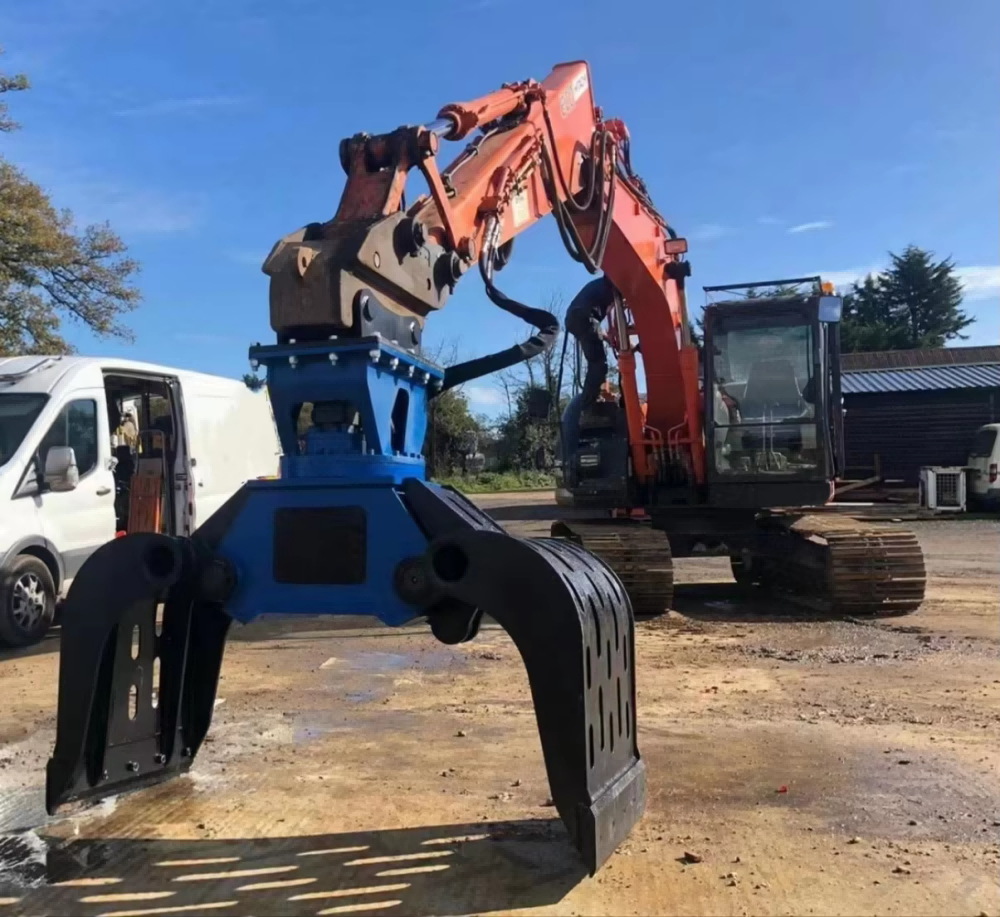
HMB, the premium attachment brand from Yantai Jiwei Construction Machinery, highlights that most on-site failures — poor fitment, unstable gripping, fast premature wear, structural cracking after only months of service — are rarely caused by poor manufacturing quality. The root cause is model mismatch. Drawing on years of field data and customer feedback, HMB outlines five core parameters buyers must evaluate before ordering a demolition grapple, guiding customers to select a grapple matched to their real working conditions rather than price or tonnage alone.
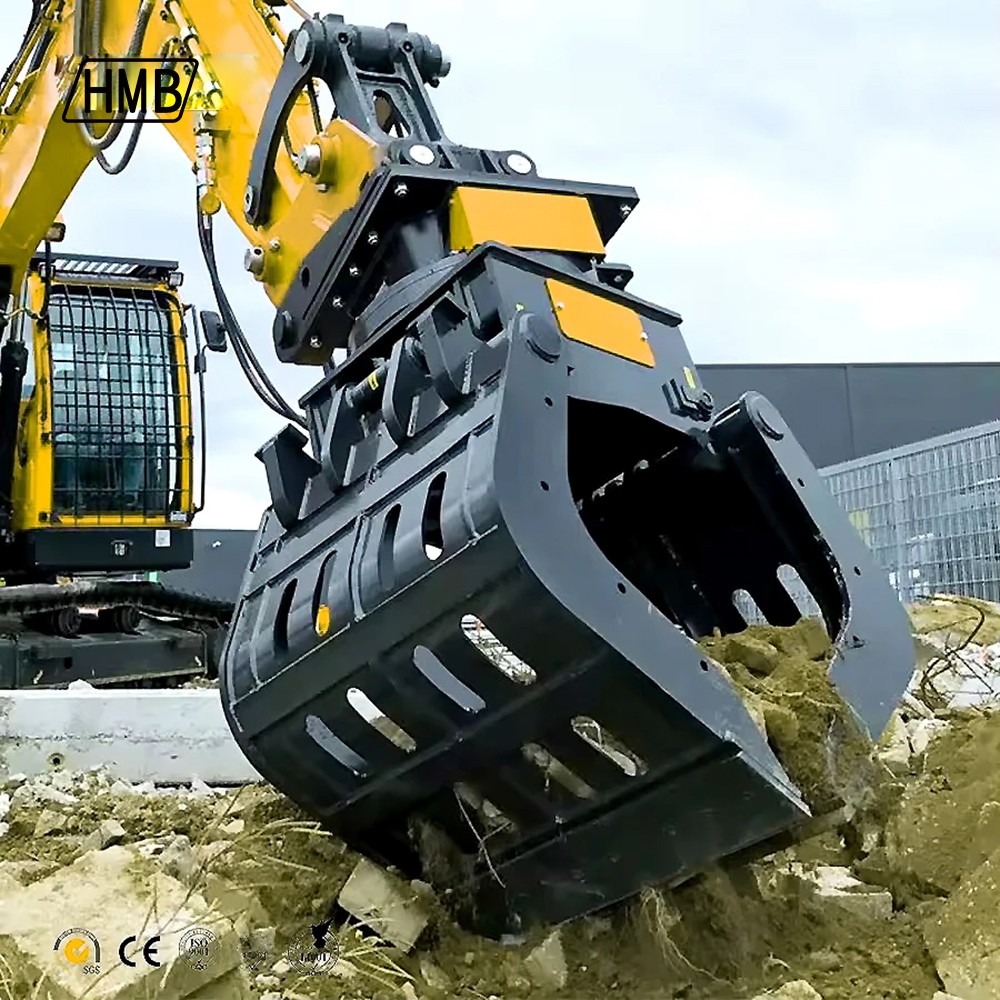
1 Excavator Tonnage ≠ Grapple Working Capacity
Weight matching comes first. Buyers must calculate the full load envelope: rated lifting capacity, working radius, grapple self-weight plus the weight of the material to be handled. As the excavator boom extends further out, its safe lifting capacity drops sharply.
HMB engineers recommend matching jaw opening size, cylinder clamping force and rotation torque to the shape and density of the materials. An oversize, overweight grapple overloads the excavator structure and auxiliary hydraulic circuit; an undersized unit will suffer accelerated fatigue under continuous heavy loads.
2 Mounting Dimensions Must Be Exact, Not “Almost Fit”
For direct pin-on grapples, four installation dimensions are non-negotiable: pin diameter, centre-to-centre pin distance, arm ear width and H-link / bracket ear width. Minor dimension mismatches create connection gaps, triggering rapid wear on pins, bushings and pin holes, plus difficult installation and unsafe operation.
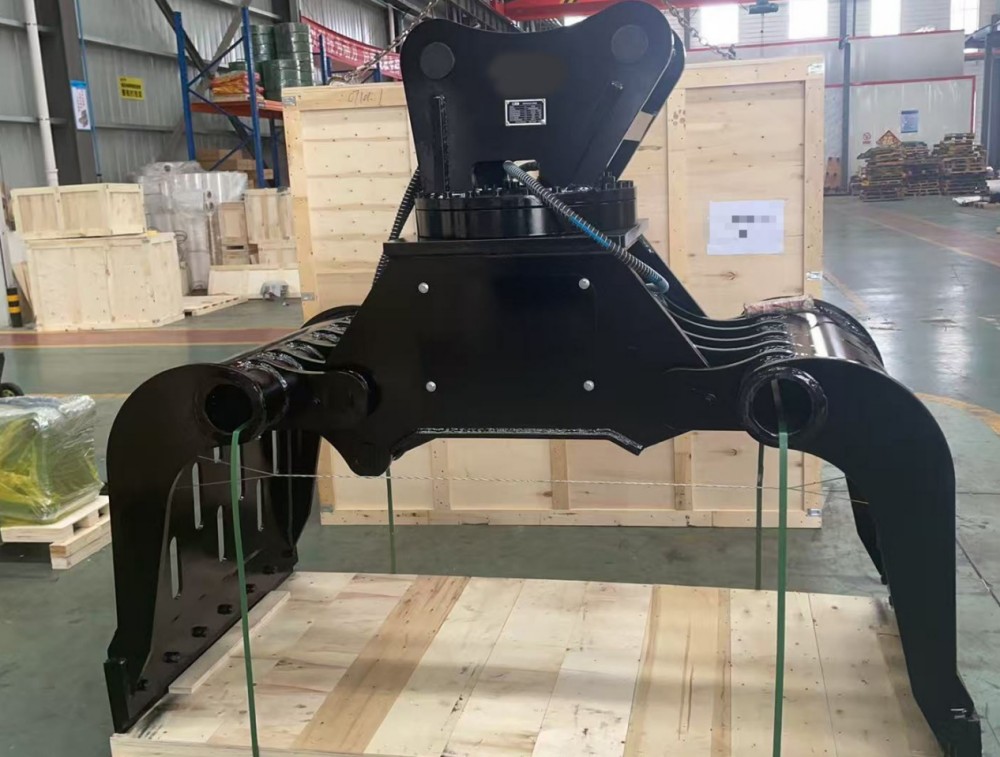
HMB requires customers to supply both excavator model and these four mounting dimensions for technical verification before production. A loose “near fit” never equals safe, reliable performance on a demolition site. Quick coupler versions are also available for fleets that frequently swap buckets, grapples and other attachments.
3 Hydraulic Flow & Pressure Define Speed and Gripping Power
Flow controls cycle speed; pressure determines clamping force. This rule directly governs grapple performance.
- Low auxiliary flow → slow open/close action and low throughput
- Excessive flow → hydraulic overheating and seal degradation
- Insufficient working pressure → weak grip, dropping heavy concrete or scrap loads
- Overpressure → motor leakage, cylinder damage and grapple frame cracking
HMB stresses that buyers must reference the auxiliary hydraulic circuit specifications, not the excavator main pump parameters, to match the grapple hydraulic package correctly. All HMB grapple hydraulic layouts are tuned to match the customer’s excavator auxiliary settings.
4 Choose Connection Style Based On Workflow
Two mainstream connection options are offered across the HMB grapple range. Direct pin mounting delivers superior structural rigidity for heavy, continuous demolition tasks. Quick-hitch connection maximises flexibility for contractors who regularly switch between buckets, grapples and other attachments. Whichever system is selected, all pin and interface dimensions must be precisely validated.
5 Specify Grapple Design for Your Material, Not Just Budget
HMB produces application-optimised grapple geometries for different materials:
- Demolition & construction waste: wide jaw opening, box-style tines for concrete, rebar and mixed rubble
- Scrap metal yards: enhanced wear resistance and bolt-on replaceable tooth tips
- Timber handling: curved tine profile for secure grip on round logs
Using a light-duty grapple for heavy demolition may reduce upfront purchase cost, but accelerated wear, frequent downtime, repair bills and early structural failure push total ownership cost far higher.
What Makes a High-Quality HMB Demolition Grapple?
Beyond core matching parameters, HMB builds durability into every detail:
- NM400 / NM500 high-strength wear-resistant steel for tines and main frame
- Heat-treated pins and replaceable, self-lubricating bushings
- Heavy-duty cylinder guarding against falling debris and impact
- Quick-change tooth tip design for fast field maintenance
- Heavy-duty slewing bearing and rotation motor for 360° rotating models
HMB demolition and sorting grapples cover rotating and fixed versions, light-duty and heavy-duty variants, compatible with excavators from 4 to 36 tons. Every unit can be customised according to carrier specs and site requirements. Backed by ISO9001 and CE certification, the brand supplies full warranty and global after-sales support for demolition, recycling and material handling fleets worldwide.
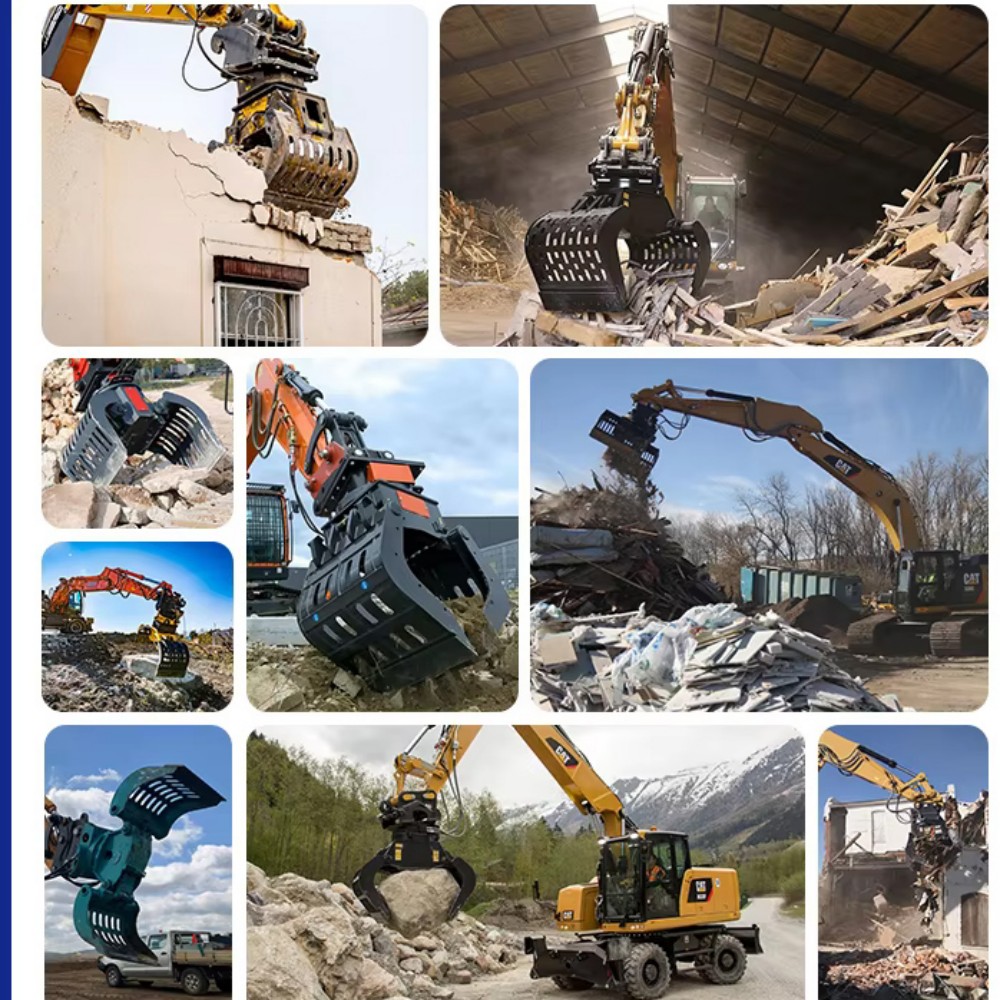
HMB—a professional manufacturer of excavator attachments—delivering reliable attachment solutions for diverse operating conditions.
Contact : Yantai Jiwei Construction Machinery | HMB Attachments
Website: hmbhydraulicbreaker.com
Post time: Oct-26-2026


