
Typical Representatives:
Log /rock grapple ;
Orange peel grapple
Australia grapple
Saw grapple;
Timber clamps grapple
demoliton sorting grapple
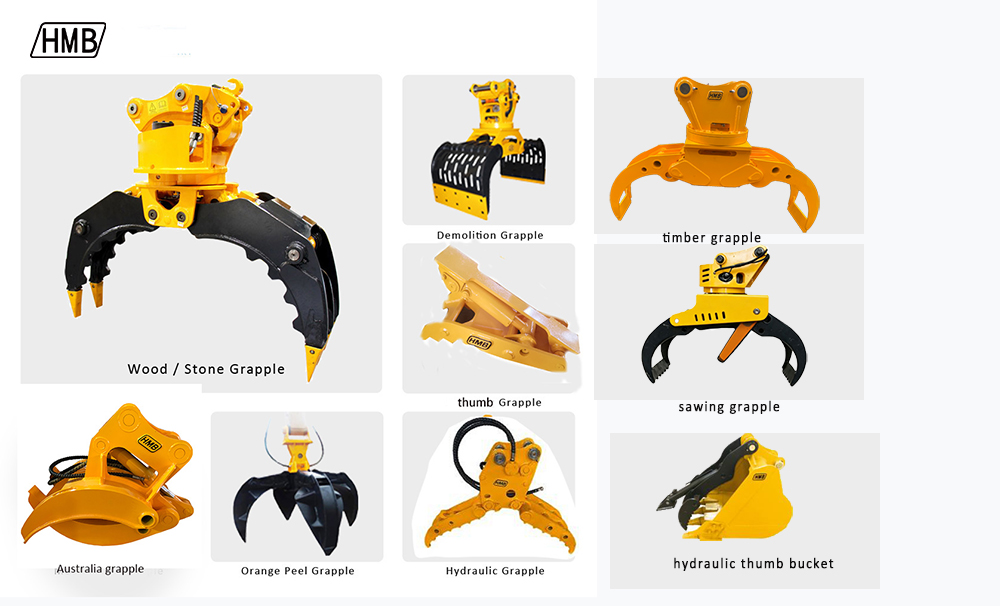
the core of these attachments is not impact energy:
Clamping force; Opening and closing speed; Structural strength; Rotational stability
When selecting a model, the following should be prioritized:
1) The weight of the primary material to be grasped
2) Whether continuous sorting is required
3) Whether a rotary function is required
If the material density is high (such as scrap steel), structural strength and hydraulic cylinder thrust are more important. If sorting lightweight materials, speed and flexibility are more critical.
Shearing Attachments: Cutting Capacity and Blade Structure
Typical Representatives:
Hydraulic shear
Demolition shears
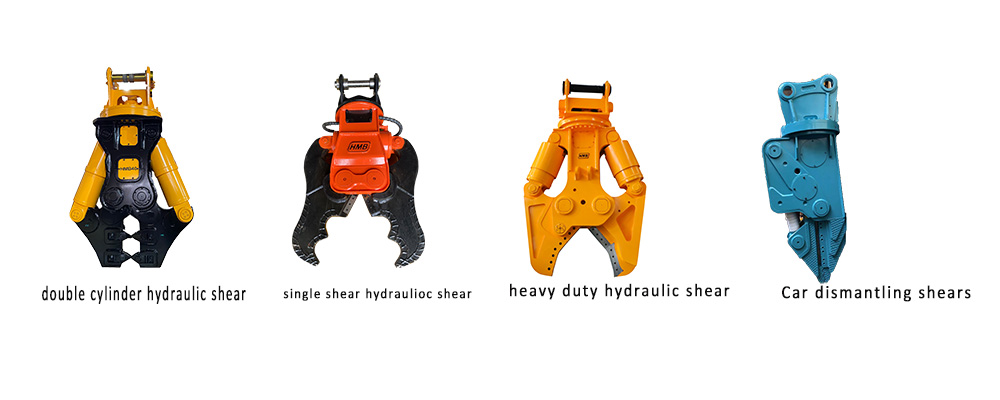
The core features of this type of attachment lie in:
l blade design,
l shearing angle
l hydraulic thrust
l structural wear resistance.
Key selection considerations include:
1) The thickness of the main shearing material
2) Whether high-strength steel is involved
3) Whether quick blade replacement is required
If primarily dealing with high-strength steel structures, the thrust and blade material must be matched. If demolishing a mixed concrete and reinforced concrete structure, overall structural strength is more important.
Screening and crushing buckets: Prioritize throughput
Typical Representatives:
crusher bucket
Screening bucket
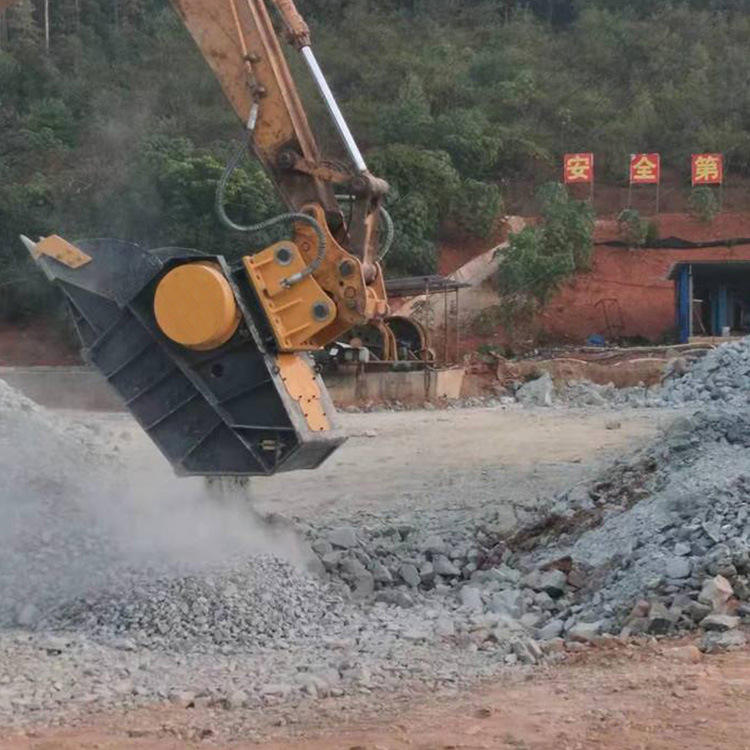
1) The logic of these attachments differs from that of a hydraulic breaker. The core issues are:
2) Hourly processing capacity
3) Output particle size
4) Material moisture content
5) Whether it contains impurities.
When selecting a model, consider:
1) The main types of materials it processes
2) Whether a fixed particle size is required
3) Whether continuous operation is required
For example, wet, sticky materials are prone to clogging, so the structural design must consider self-cleaning capabilities.
Ignoring material characteristics will result in a significant drop in efficiency.
Compactor categories: frequency and impact area
The selection logic for compactors includes:
compaction area
impact frequency
working depth.
Large-area backfilling is suitable for wide-base structures, while narrow trenches require small-sized, high-frequency structures. If the area is selected incorrectly, it will either be inefficient or unable to access the construction space.
Choosing Between Rotary and Non-Rotary Structures
Many attachments offer both rotary and non-rotary structures.
l Advantages of Rotary Structures:
Flexible operation Easy angle adjustment
l Disadvantages:
More complex structure
Higher cost
Higher maintenance requirements
Higher maintenance requirements
If frequent angle adjustments are required during operation, the value of a rotary structure is significant.If the operating posture is fixed, a non-rotary structure is simpler and more reliable.
Yantai Jiwei Construction Machinery Equipment Co., Ltd. specializes in manufacturing various excavator attachments, including grab buckets, hydraulic breakers, crushers, hydraulic shears, and more. We offer a complete range of equipment, support customization, and our products are durable and compatible with major excavator brands. Whether you’re involved in municipal demolition, stone quarrying, waste recycling, or landscaping projects, we can provide you with a high-performance, cost-effective attachment solution. For any purchasing or selection inquiries, please feel free to contact us!
Post time: Jul-24-2026


